







Today, the National Association of Lobbyists of Ukraine took a step no other institution in the country has previously undertaken — initiating the practical implementation of the Berkeley Protocol into Ukraine’s national procedural and law enforcement practice.
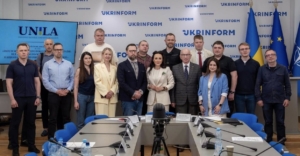
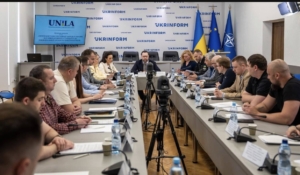
During the professional event “Implementation of the Berkeley Protocol in Ukraine: From International Standards to National Procedural Practice”, representatives of law enforcement agencies, the expert community, and digital forensics specialists discussed modern international approaches to documenting digital evidence and its use in criminal proceedings.
The event was organized by Oleksiy Shevchuk and the team of the National Association of Lobbyists of Ukraine, bringing together representatives of the National Police of Ukraine, the Security Service of Ukraine, military law enforcement units, special forces, the Prosecutor General’s Office, and the National Bureau of Investigation.
The discussions focused on:
— international standards for documenting digital evidence;
— the procedural status of OSINT materials in Ukrainian criminal proceedings;
— admissibility, authenticity, and verification of digital evidence;
— the use of photographs, videos, satellite imagery, and social media content in the investigation of international crimes;
— implementation of the Berkeley Protocol into Ukrainian legal practice;
— development of unified interagency methodologies for handling digital evidence.
Particular attention during the presentation was devoted to the application of the Berkeley Protocol in cryptocurrency investigations and financial crime cases.
Key topics included:
— documentation of blockchain transactions;
— identification and preservation of wallet addresses;
— smart contract verification;
— collection of evidence from crypto exchanges, social media platforms, and darknet resources;
— establishing links between entities and transactions.
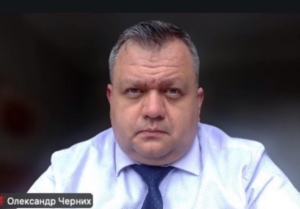
One of the practical cases was the international operation against Garantex / Grinex and the Ukrainian Modern Digital Science research, prepared by Tetіana Dmytrenko, Oleksandr Chernykh and Tetіana Hudima together with the AMLBot, Global Ledger and Crystal teams and presented by Oleksandr Chernykh.Despite sanctions, the total transaction volume processed through the Garantex platform since 2019 reportedly reached at least USD 96–100 billion.
On March 6–7, 2025, a joint international operation involving the United Kingdom, the United States, Germany, and Finland resulted in:
— the seizure of three Garantex domains;
— the freezing of approximately USD 26 million in cryptoassets;
— criminal charges against members of the exchange’s management;
— the subsequent arrest in India of one of the administrators at the request of the United States.
Following the shutdown of Garantex infrastructure, analysts identified a structural migration of liquidity and users to the new Grinex platform through asset conversion mechanisms and balance transfer schemes.
Participants also discussed the transformation of Russian cryptocurrency regulation — from attempts to ban cryptocurrency circulation in 2022 to the legalization of mining, authorization of cryptoassets for international settlements, and the establishment of special legal regimes for cross-border crypto payments in 2024.
Throughout the discussions, speakers emphasized that digital evidence, blockchain forensics, and OSINT are rapidly becoming essential components of modern criminal procedure and international justice.
For Ukraine, it is critically important to build its own procedural practice based on international standards now, rather than adapting to them after the fact.
